

By Baer Electric Inc. Published
On this page
A cabin that sits empty for months needs two short electrical routines: one when you open in spring and one when you close in fall. Most of it is looking, testing and switching things in the right order. The rest is knowing which things you find are a job for an electrician.
Why cabins need their own routine
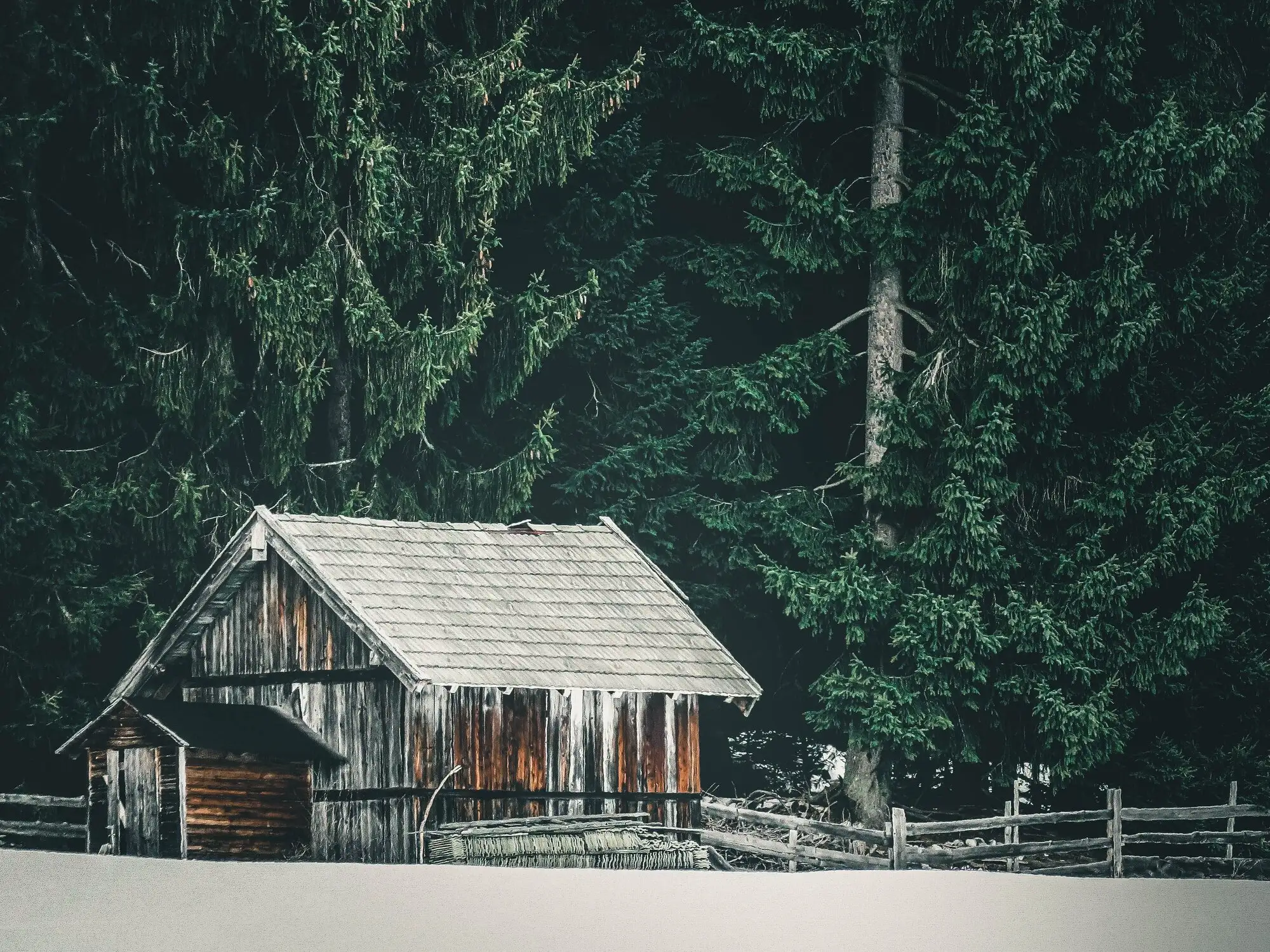
Cabins in and around Meadow Lake Provincial Park sit through long, cold winters with nobody watching. Regional normals from Meadow Lake Airport put the January mean at −16.8 °C and the frost-free season at about 96 days. Mice move in, water freezes where it shouldn’t, and power outages come and go without anyone noticing. And when something does go wrong, help can be a fair drive away, whether your place is on Lac des Îles, at Kimball Lake or out at Waterhen.
Spring opening checklist
| Step | What to do | Stop and call if |
|---|---|---|
| Walk around first | Look at the service wires, mast and meter base for storm or tree damage | A line is down, sagging or touching branches |
| Look before you power up | Open the panel door (not the cover) and look for water, rust, droppings and scorch marks | You see any of them |
| Power up in order | Branch breakers off, main on, then branch breakers on one at a time | A breaker trips straight away |
| Water heater | Fill it completely before you turn its breaker on | It was drained and you can’t confirm it’s full |
| Water pump | Prime it per its manual, then watch it start and stop cleanly | It runs constantly, short cycles or trips the breaker |
| GFCIs | Press TEST, then RESET, on every GFCI receptacle and breaker | It won’t trip or won’t reset |
| Smoke and CO alarms | Test each one, fit fresh batteries, check the replace-by date on the label | An alarm is past its date or won’t sound |
| Outdoor and dock receptacles | Check the covers, look for water inside, test GFCI protection | Covers are broken or there’s no GFCI protection |
| Hot tub | Check the equipment bay for mice and water, fill it before powering up, test its GFCI | The GFCI won’t trip or reset |
An electric water heater switched on with an empty tank can burn out its elements, which is why it comes last. If you’re not sure whether it was drained in the fall, assume it was and fill it.
Fall closing checklist
First decide what kind of close it is. A winterized cabin is drained and mostly unpowered. A heated cabin stays warm enough to keep water in the lines. The electrical steps are different.
For a winterized cabin:
- Turn off the water heater breaker before you drain the tank.
- Turn off the pump breaker before you drain the pump and lines.
- Shut off and drain the hot tub as the manufacturer directs, or arrange for someone to look after it.
- Empty the fridge, switch it off and prop the door open.
- Unplug electronics and small appliances.
- Leave on only what has a job, such as a sump pump, a yard light or a monitoring device.
For a heated cabin:
- Check heaters and thermostats before the cold arrives, not after.
- Plug in and check the heat trace on every line that will hold water.
- Put fresh batteries in the smoke and CO alarms.
- Think about a low-temperature alarm or remote monitor, so you hear about it if the heat or power fails.
What to leave on or off
| Item | Winterized cabin | Heated cabin |
|---|---|---|
| Main breaker | On only if something below stays on | On |
| Water heater | Off and drained | On, or off if you won’t need hot water |
| Water pump | Off and drained | On if the lines stay live |
| Heat trace | Off if the lines are drained | On, and checked before freeze-up |
| Heat | Off | On, thermostats set |
| Sump pump | On | On |
| Fridge and freezer | Off, doors propped open | Your call |
| Electronics | Unplugged | Unplugged unless needed |
Heat trace
Heat trace keeps water and sewer lines from freezing, and it tends to fail quietly. A few rules:
- Check it before the first hard freeze. Many have an indicator light; if yours doesn’t, ask us how to test it.
- Plug it into an outdoor-rated receptacle, never an indoor extension cord.
- Follow the manufacturer’s instructions. Constant-wattage cable must never overlap itself. Self-regulating cable is more forgiving, but find out which kind you have before you assume.
- Look for cracked jackets, crushed sections and chewed spots.
- If it trips a GFCI or a breaker, treat that as a warning. Damaged heat trace is a shock and fire risk. Unplug it and call an electrician rather than resetting it over and over.
- If it has no thermostat, unplug it for the summer.
Hot tubs and the 2024 code
Saskatchewan has enforced the 2024 Canadian Electrical Code since June 1, 2025, and TSASK has flagged changes for hot tubs. A copper wire ring must now be installed around a hot tub placed directly on the ground, and cement pads or blocks are no longer considered enough separation on their own. The disconnect has to be outside the dwelling, readily accessible, lockable when it’s out of sight of the tub, and generally not within 1.5 metres of it. Replacing a tub with a similar one on an existing pad doesn’t trigger the new ring rule, though TSASK still recommends a non-conductive surface around it.
Under a homeowner permit, TSASK only allows hot tub wiring if the owner or an immediate family member is a licensed Electrical Journeyperson. If you’re adding or moving a tub, plan on a licensed contractor.
Surge and outages
Rural lines see lightning and outages, and a cabin full of electronics sits through all of it with nobody home. Unplugging electronics when you close is free protection. A surge protective device at the panel covers the whole cabin; ask an electrician whether your panel can take one.
If you run a generator during outages, never feed the cabin by plugging it into a receptacle. That can push power back onto the line and endanger the crews working on it. A generator connection needs a proper transfer switch or interlock, and TSASK lists generators among the jobs that aren’t eligible for a homeowner permit.
A permit note for cabin owners
TSASK requires a licensed electrical contractor when “the owner does not reside on the premises.” If the cabin isn’t where you live, you may not qualify for a homeowner permit at all. Check with your local TSASK inspector before you start a project.
When to call an electrician
Call for anything in the “stop and call” column, any water or rodent signs in the panel, heat trace that trips, a pump that won’t behave, or a hot tub you’re adding or moving. We do cabin and lake property electrical work around Meadow Lake Provincial Park, from our base just south of the park near Goodsoil.
Common questions
Should I shut off the main breaker when I close the cabin?
In what order should I turn the breakers back on in spring?
Do I need a permit to wire a hot tub at my cabin?
Can I do my own electrical work at my cabin?
Sources
- TSASK: Hot Tubs, New 2024 Canadian Electrical Code
- TSASK: Electrical (2024 CEC enforcement)
- TSASK: Home/Farm Owner Electrical Wiring Permit
- Meadow Lake Provincial Park
- Meadow Lake, Saskatchewan: climate (Meadow Lake Airport, 1991–2020 normals)
- Environment and Climate Change Canada: Meadow Lake A climate normals (1981–2010)